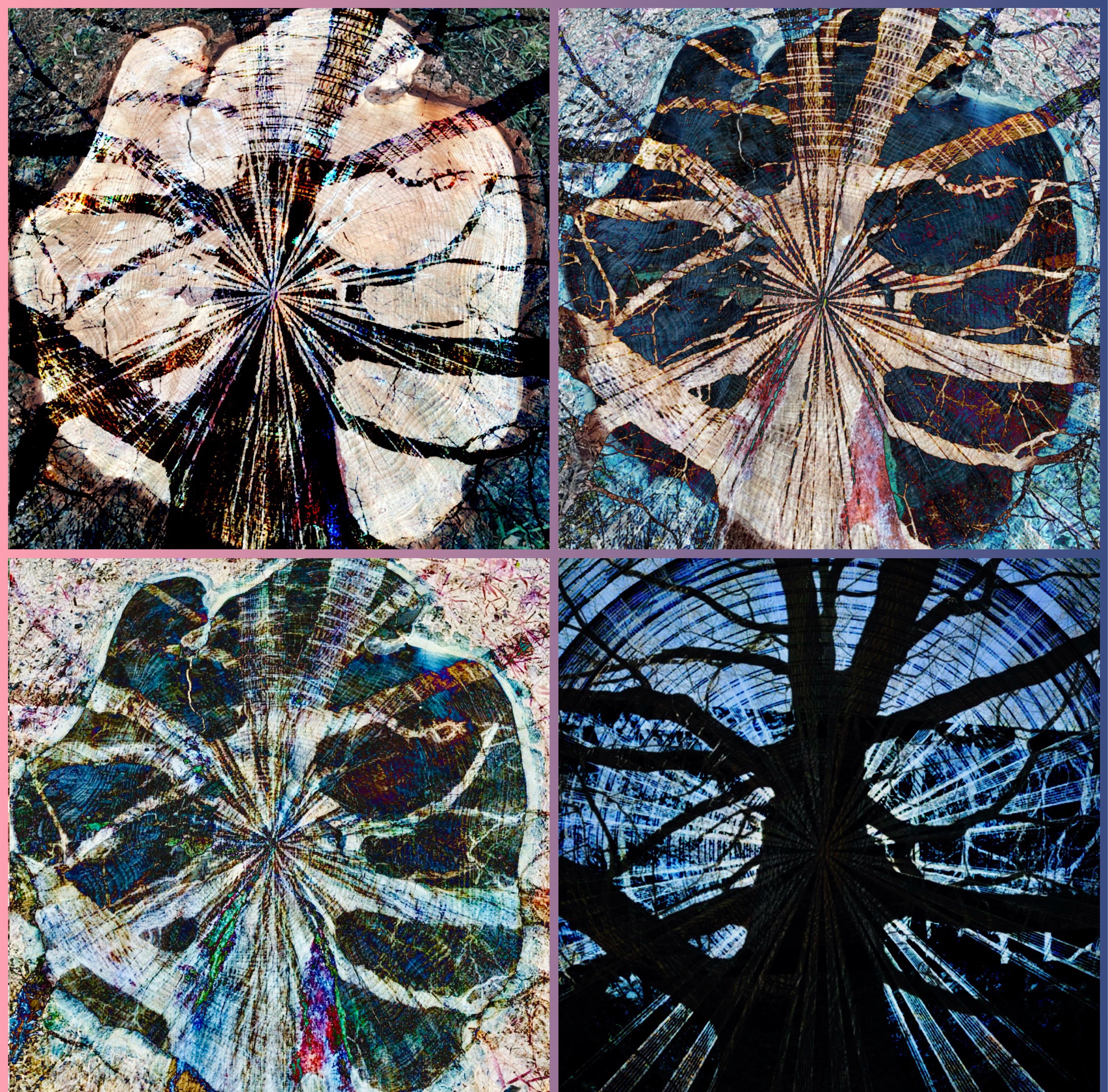
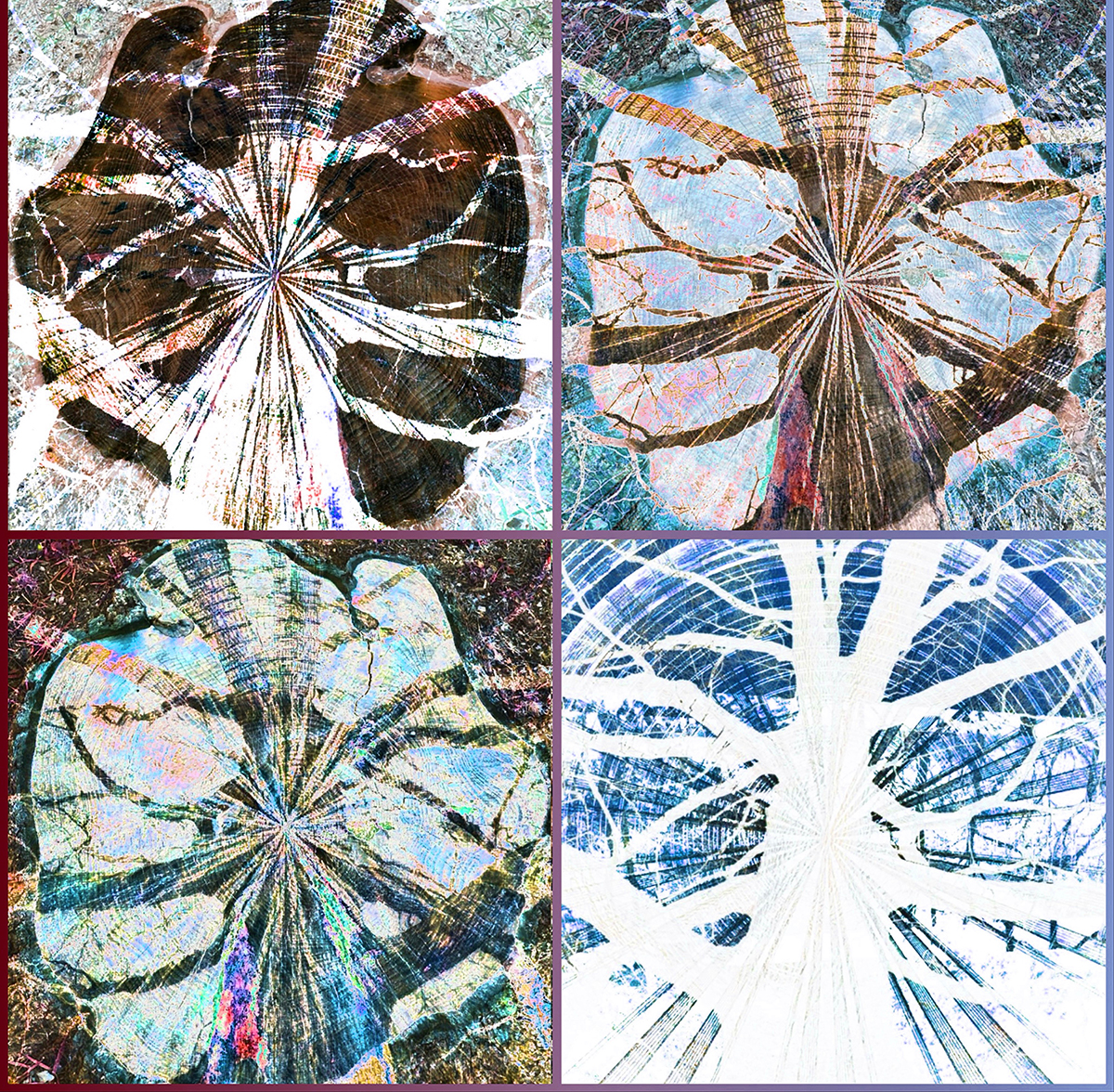
I am a Lunar Receiver. I am a noticer, a documenter, an archivist, the one who is always standing by and bearing witness to all that unfolds around me.
I prefer the evening hours – at night I am solitary and can hear my own thoughts without the interference of other people’s “broadcasts.” I experience life on the spectrum and even before I consciously understood this fact, I was always aware that during the daytime other people’s thoughts and moods often override or crowd out my own. Like the singer Laura Branigan once sang, “I live among the creatures of the night.” Yes, that is me, I often sing that line to myself as I walk around the house at 2 or 3AM lit quietly with a small reading headlamp and with some soft jazz playing in the background.
The phrase “the dark night of the soul” originates from the Spanish mystic and poet St. John of the Cross (1542–1591), it represents an important phase in the unfolding of the human being – a time of unknowing, of navigating alone in uncharted territory, of meeting up with ambiguity, paradox and creativity which are often only revealed in the shadows of solitary exploring.
As a culture we might need to give up or pause on our over-infatuation with what Jake Sherman refers to as “shiny bright things.” We invent these shiny toys with the tools of our solar consciousness, and they are often marketed as marvels to behold and are extremely helpful conveniences in the art of broadcasting our thoughts and opinions across the globe, but do we even understand what it is that they really do?
In a very literal way, human development in the form of cities, buildings, highways, roads, cars and most especially artificial lighting impacts the habitats and migration patterns of all animal species, most especially nocturnal species like birds, bats, raptors, moths, butterflies, salamanders, and other mammals and insects.
The constant illumination of bright artificial lights disrupts human sleep cycles as well as interfering with the pollination of plant life. The widespread concern over light pollution has just become more widely known in the last decade and is another example of our species’ over-emphasis on greeting our lives and surroundings with solar consciousness and excessive control.
Some of my favorite thinkers also enjoyed the quiet of night for reflection, cogitation and the practice of active imagination:
Emmanuel Levinas (1906-1995) explored ideas related to the nocturnal in books like Totality & Infinity where he described the night as a realm of ambiguity where the power, independence and sense of control usually demanded and more readily bestowed upon our solar egos might be lost, hidden, or otherwise “out of sight.”
C.G. Jung (1875-1961) had numerous groundbreaking epiphanies during the evening hours, most notably his famous “confrontation with the unconscious” which brought about his greatest discoveries. For Jung the night was a deep mysterious space and place where profound insights and sacred undercurrents of meaning might arise and shift
consciousness.
Howard Teich (1942-) in his visionary text, Solar Light, Lunar Light compares and contrasts lunar awareness with solar experience and discusses how nocturnal consciousness is receptive, non-linear and intuitive – all qualities that complement the logic, power and confident cognition of solar sentience, but that aren’t often given equal emphasis in modern western society.
Henry Corbin (1903-1978) hints strongly at how the nocturnal might even be an ontological site of transformation and connection to the veiled essence and spiritual insights of the mundus imaginalis. Henry Corbin’s work involves visions, dreams and sacred texts. He encourages readers to embrace mystery and to take the plunge into the deep sacred dimensions of life.
This is not unlike Joseph Campbell’s “Hero’s Journey” where one cannot follow another person’s path, but must go forth in solitude, sans the distractions of solar consciousness and its connected tools and technologies of / for control. The night path is a place for introspection, self-examination, metamorphosis, and engagement with the eternal.
We are out of balance with nature (and ourselves as part of nature) in many ways as human beings and one glaring way is in our concepts related to “enlightenment.” As a species we revel in shining a light on everything under the sun, on certainty, simplification, prediction and control while neglecting our other aptitudes, one of them being nocturnal consciousness and all of its concomitant connections, processes and gifts (like intuition, imagination, flow, creativity and openness to ambiguity and paradox).
 Life as Zen Voyaging
Leave a comment